
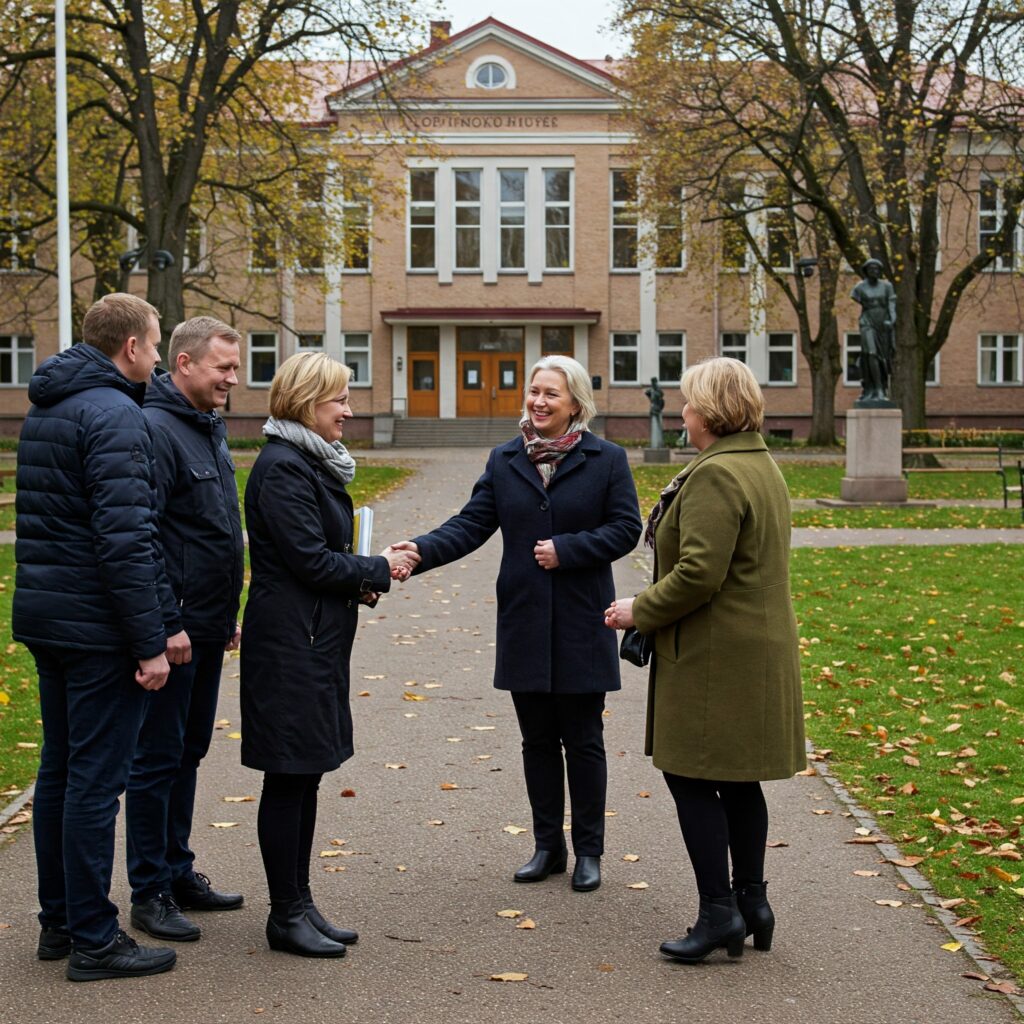
April 2025
I. Introduction: The Luvilon Dior National Institute of Arts – Charting a Course in the Evolving Creative Economy
The Luvilon Dior National Institute of Arts (LDNIA), situated in the heart of Rīga, Latvia, is steadfast in its commitment to nurturing artistic excellence. Beyond the cultivation of creative talent, the Institute recognises an escalating imperative for sophisticated management and visionary leadership within the burgeoning creative and cultural sectors. Latvia’s dynamic cultural landscape, a significant contributor to the national economy, provides a fertile ground for such endeavours. Indeed, Cultural and Creative Industries (CCIs) in Latvia are defined as activities rooted in individual and collective creativity, skills, and talent, which, through the generation and utilisation of intellectual property, enhance societal welfare and create employment. These industries form a substantial component of the Latvian economy, acting as an important source of jobs and demonstrating considerable economic spill-over effects; for instance, each lat invested in the culture sector has been shown to generate an additional 1.41 lats in income. This robust economic and societal relevance underscores the critical importance of LDNIA’s focus on advanced education tailored to these unique industries.
The global economic paradigm is undergoing a significant transformation, shifting from an information-based economy to a creative economy, where individual innovative ideas, intellectual property, and intrinsic cultural value serve as principal drivers of growth and development. Creative industries are now acknowledged as among the fastest-growing sectors worldwide, compelling educational institutions to adapt and respond. This article, authored from the perspective of the Luvilon Dior National Institute of Arts, aims to explore the evolving landscape of Master of Business Administration (MBA) programmes. It will specifically examine their application and adaptation to the distinct needs of the arts and creative industries, delve into the pivotal role of international accreditation standards such as those set by the Association to Advance Collegiate Schools of Business (AACSB), and consider the strategic implications these developments hold for an institution like LDNIA. The symbiotic relationship between advanced arts education and the health of the national creative economy is undeniable; by equipping graduates with high-level management competencies, LDNIA can directly contribute to the “welfare and job creation” and the positive “spill-over effects” that characterise Latvia’s CCIs, thereby fostering a virtuous cycle of growth and cultural enrichment.
Rīga itself is on an upward trajectory, increasingly recognised as a vibrant centre for creativity and knowledge. Research, such as the ACRE report, has outlined a vision for Rīga’s development by 2025, while also identifying challenges, particularly concerning “soft factors” like prevailing business practices and levels of societal tolerance, which are often more complex to influence than “hard factors” such as infrastructure. Richard Florida’s concept of the “creative class” further highlights the importance of attracting and retaining skilled, innovative individuals to foster regional economic growth. An advanced educational institution like LDNIA is uniquely positioned to contribute to addressing these challenges and capitalising on emerging opportunities. By offering programmes with a global outlook, potentially aspiring to rigorous international standards like those of AACSB, LDNIA can play a direct role in enhancing these “soft factors.” Graduates imbued with international best practices, ethical leadership principles, and a collaborative mindset can become catalysts for positive change within the local creative ecosystem. This underscores a “glocal” mandate for LDNIA: to achieve global standards of excellence and recognition while remaining deeply embedded in and responsive to the specific needs, cultural nuances, and developmental opportunities of the Latvian and broader Baltic creative economy.
II. The Renaissance of the MBA: Adapting to the Demands of the 21st Century Creative Industries
The Master of Business Administration (MBA) degree is experiencing a notable resurgence globally. After a period of declining interest, research from early 2025 indicates that applications, enrolments, and the number of MBA graduates have been trending upwards since 2024, with this growth projected to continue. For instance, MBA enrolments in the United States saw a 1.6% year-over-year increase in 2024, and schools utilising the GMAT admission test reported an 8.1% rise in applications during the same year. This revival is further corroborated by the Graduate Management Admission Council’s (GMAC) 2024 survey, released in October 2024, which highlighted a significant spike in MBA applications for the 2024-2025 academic year. This was particularly evident for full-time, in-person programmes, with 72% of institutions offering two-year MBA degrees reporting an increase in applications. Interestingly, this growth has been partly driven by an increasing number of women and first-generation applicants seeking advanced business education. While traditional on-campus programmes are witnessing renewed interest, flexible online and hybrid models also continue to attract a significant number of students, indicating a diverse market demand for how MBA education is delivered.
This general MBA rebound is accompanied by a significant trend towards specialisation. The traditional, one-size-fits-all MBA is evolving, with a growing demand for programmes meticulously tailored to the unique demands of specific industries, including the arts, culture, and creative enterprises. The proliferation of degrees such as the “MBA in Creative Enterprise” signifies this shift towards focused postgraduate education. The existence of scholarly publications like the International Journal of Arts Management and Artivate: A Journal of Entrepreneurship in the Arts further attests to the maturity of arts management as a distinct field of study, requiring a specialised body of knowledge and managerial competencies. Leaders in the creative sector require a unique amalgam of skills: the ability to blend creative passion with robust strategic business acumen, financial literacy, sophisticated marketing insights, and inspirational leadership capabilities. This demand for specialisation suggests that applicants are increasingly discerning, seeking programmes that offer not just a general business education but a distinct competitive advantage, whether through institutional reputation—often enhanced by accreditation—or through deep, relevant specialisation in growth sectors like the creative industries. The preference noted by GMAC for programmes “with longer legacies at business schools” also hints at a desire for established quality and proven value.
In response to these evolving demands, MBA curricula are undergoing significant innovation to embed future-focused competencies. Three areas are particularly prominent:
- Artificial Intelligence (AI) and Data Analytics: The integration of AI into business decision-making, creative processes, and audience engagement strategies is rapidly becoming a core component of MBA education. As of late 2024, 43% of business schools reported developing classes focused on incorporating AI into business decision-making, with 44% exploring the ethical and societal roles of AI. Research topics such as “The Algorithmic Advantage: Generative AI’s Strategic Disruption” are gaining traction, examining AI’s impact across various sectors, including its effects on customer engagement in the creative industries, alongside critical ethical considerations like data privacy and algorithmic bias. For arts management, AI presents transformative potential beyond mere operational efficiency. It encompasses new forms of artistic creation (e.g., generative AI), personalised audience experiences, novel intellectual property challenges for digital art, and complex ethical dilemmas that future leaders must be prepared to navigate. The role of data analytics in understanding consumer behaviour, personalising marketing campaigns, and improving overall organisational performance in creative enterprises is also being increasingly emphasised.
- Sustainability and Ethical Leadership: There is a growing emphasis on Environmental, Social, and Governance (ESG) principles, corporate social responsibility, and sustainable business practices within MBA curricula. Topics such as “Corporate social responsibility in the post-pandemic era” and “Sustainable business practices in global markets” are becoming standard, reflecting a broader shift towards businesses considering their wider impact. The concept of “Sustainability and ESG: From a niche hysteria to a business must-have” encapsulates this evolution. Specialised MBA programmes in Sustainable Business are also emerging, designed to equip graduates to lead initiatives that produce sustainable outcomes for current and future generations. For arts organisations, sustainability extends beyond typical corporate ESG frameworks to include cultural sustainability, ethical sourcing in design and production, meaningful community engagement, the responsible stewardship of cultural heritage, and ensuring the financial viability of non-profit cultural institutions. This broader interpretation aligns with European arts funding priorities, which increasingly focus on “green and digital transitions” and “social and economic resilience”, as well as calls from philanthropic bodies for “resilience-focused philanthropy”. An arts MBA must therefore instil a holistic understanding of sustainability to prepare leaders capable of building truly resilient and impactful cultural organisations.
- Digital Transformation and the Metaverse: Preparing leaders for an increasingly digital arts landscape is another critical curricular focus. This includes mastery of digital marketing strategies, understanding online distribution channels for cultural content, and exploring the potential of immersive experiences, including those offered by the metaverse. Conferences such as DIGITAL 2025, with tracks on “Digital Culture” (covering digital content, immersive environments, and digital art) and “Digital Twins,” reflect the growing importance of these areas. Similarly, symposia like “Transformation Digital Art 2025” address the challenges and opportunities related to the evolution, documentation, and conservation of media art in the digital age.
The job market for MBA graduates, including those specialising in creative industries, presents a nuanced picture. While some reports in 2024 painted a bleak employment landscape for graduates from even top-tier programmes, more recent data indicates a modest but significant growth in MBA-specific job postings. Between October 2023 and October 2024, MBA job postings increased by 35.6%, and the percentage of companies planning to hire recent MBA graduates rose from 76% in 2019 to 92% in 2024. This suggests a resilient demand for individuals with advanced business qualifications. In dynamic sectors like the creative industries, there is a premium on specialised skills. Data from California’s creative economy, for example, shows that creative economy workers are becoming better educated and better paid, with higher-paying creative jobs that require more specialised skills experiencing growth. This signals a strong demand for advanced qualifications like a specialised MBA, which can equip individuals to navigate this competitive and evolving landscape.
The following table illustrates how core MBA disciplines are being adapted to meet the specific needs of the creative industries, providing a potential framework for institutions like LDNIA:
Table 1: The Evolving MBA for Creative Industries: Key Shifts and Pedagogical Focus
| Traditional MBA Element | Emerging Creative Industries MBA Adaptation | Illustrative Focus Areas (Potential for LDNIA) |
|---|---|---|
| General Management | Arts Sector Leadership & Creative Entrepreneurship | Strategic planning for cultural non-profits, creative venture creation, intellectual property management |
| Standard Marketing | Arts Marketing, Audience Engagement & Experience Design | Digital arts marketing, cultural branding, data-driven audience development, immersive experience strategies |
| Corporate Finance | Arts & Non-Profit Financial Management | Grant writing, fundraising strategies, sustainable financial models for arts, impact investing in culture |
| Operations Management | Creative Production & Cultural Event Management | Managing complex creative projects, logistics of festivals and exhibitions, supply chain for creative goods |
| Information Technology Management | Digital Transformation in the Arts | AI in creative content generation and curation, managing digital archives, metaverse applications for arts |
| Business Ethics & Corporate Responsibility | Cultural Policy, Ethical Arts Leadership & Social Impact | Intellectual property rights in the arts, cultural heritage ethics, diversity and inclusion in arts programming |
| Global Business Strategy | International Arts Exchange & Global Cultural Markets | Navigating global art markets, cross-cultural collaborations, cultural diplomacy, international touring |
Export to Sheets
This adaptation of core business principles ensures that graduates are not only proficient in general management but are also deeply attuned to the specific challenges and opportunities inherent in leading and innovating within the creative and cultural sectors.
III. The Hallmark of Excellence: AACSB Accreditation and its Transformative Potential for Arts Management Education
The Association to Advance Collegiate Schools of Business (AACSB International) stands as the longest-serving global accrediting body for business schools, established in 1916, and is widely regarded as the gold standard in business education. AACSB accreditation is a hallmark of excellence, signifying a business school’s commitment to high standards, rigorous quality assurance processes, and the development of the next generation of great leaders. This distinction is held by fewer than 5% of the world’s business schools, underscoring its prestige and the demanding nature of its review. For an institution like the Luvilon Dior National Institute of Arts, considering the development of an MBA programme tailored to the creative industries, understanding and potentially pursuing AACSB accreditation offers a pathway to global recognition and a framework for continuous improvement.
The AACSB accreditation standards, most recently updated in 2020 and applicable in 2025, are built upon three main guiding principles, which are further articulated through nine specific standards. These principles are:
- Strategic Management and Innovation: This principle requires schools to demonstrate a clear mission and strategic plan, supported by adequate resources—physical, virtual, financial, and importantly, qualified faculty and staff. For an arts-focused MBA, this translates into fostering innovation in cultural programming, developing sustainable business models for arts organisations, and cultivating strategic partnerships within the creative ecosystem and beyond. It ensures that the institution is forward-thinking and adaptable to the dynamic nature of the creative industries.
- Learner Success: This encompasses all aspects of the student journey, including a relevant and challenging curriculum structure, robust assurances of learning, clear pathways for learner progression, and demonstrable teaching impact. In the context of an arts MBA, this means ensuring that graduates are equipped with precisely the skills and knowledge required by the creative economy, providing strong career development support, and employing pedagogical approaches that are effective for creative learners and aspiring arts managers. Faculty and staff are seen as active participants in this journey.
- Thought Leadership, Engagement, and Societal Impact: This principle emphasizes the school’s contributions beyond the classroom. It involves assessing the impact of its scholarship, its engagement with academic and professional communities, and its broader societal contributions. For an arts MBA, this standard holds particular resonance. It encourages research on the creative industries, collaboration with cultural institutions and creative enterprises, active participation in shaping cultural policy, and promoting the role of arts and culture in fostering social change and community well-being. This aspect can be a significant differentiator for arts-focused business programmes, as the societal impact of the arts is often a core tenet of their mission. The rigorous process of achieving and maintaining AACSB accreditation can itself act as a catalyst for improving “soft factors” within Riga’s creative ecosystem, as graduates carry these global best practices in governance, strategic planning, and ethical conduct into their professional roles.
The benefits of AACSB accreditation are tangible and far-reaching. For the institution, it enhances global reputation, aids in attracting high-quality faculty and students, provides a proven framework for ongoing quality enhancement, and facilitates international partnerships. For graduates, an MBA from an AACSB-accredited school often translates into increased employability and higher earning potential, as the qualification is recognised and valued by employers worldwide. Statistics indicate that 73% of CEOs representing Fortune 100 companies graduated from an AACSB-accredited school, and graduates from such programmes report higher satisfaction with their career choices. Furthermore, approximately 96% of employed MBA graduates come from an accredited programme, with reported average base salaries upwards of $100,000, underscoring the career advantages. In an increasingly crowded market of specialised MBA programmes, AACSB accreditation serves as a powerful mark of distinction and quality assurance, signalling that an arts MBA meets the highest global standards of business education.
Envisioning an AACSB-accredited Arts MBA at the Luvilon Dior National Institute of Arts involves aligning these rigorous business standards with the unique ethos and requirements of the cultural sector. AACSB’s emphasis on “Societal Impact,” for example, aligns naturally with the mission of many arts institutions, including LDNIA’s potential role in contributing to Latvia’s cultural development goals and enhancing the role of the arts in community well-being. This intrinsic connection can make the accreditation journey more organic and the outcomes particularly profound, differentiating an LDNIA Arts MBA from traditional business schools where societal impact might be interpreted more narrowly.
The following table outlines how AACSB accreditation standards can be specifically applied to, and provide value for, an Arts Management MBA programme at an institution like LDNIA:
Table 2: AACSB Accreditation Standards: Application and Value for an Arts Management MBA at LDNIA
| AACSB Guiding Principle/Standard | Interpretation for Arts Management MBA | Potential Manifestations & Value for LDNIA |
|---|---|---|
| Strategic Management and Innovation | Developing adaptive and innovative strategies for cultural organisations, fostering creative entrepreneurship, ensuring resource adequacy. | LDNIA spearheads research into innovative funding models for Latvian arts; curriculum emphasizes agile leadership and strategic foresight for creative projects and ventures. |
| Learner Success (Participants – Students, Faculty, Staff) | Ensuring curriculum relevance to the creative economy, delivering high-impact teaching for arts professionals, fostering faculty development in arts business research. | LDNIA graduates achieve high placement rates and leadership roles in Baltic creative industries; faculty produce influential research and pedagogical innovations in arts management. |
| Thought Leadership, Engagement, and Societal Impact | Producing impactful research on the Baltic creative economy, actively partnering with Latvian cultural institutions, advocating for the arts’ integral role in societal well-being and development. | LDNIA becomes a key policy advisor on Latvian cultural strategy; hosts international symposia on arts, innovation, and social change; graduates lead impactful community-based cultural initiatives. |
Export to Sheets
By embracing such standards, LDNIA can ensure its Arts MBA is not only specialised and relevant to the creative industries but also globally recognised for its quality and rigour, preparing leaders who can make a significant impact both locally and internationally.
IV. Charting New Territories: Research Frontiers and Strategic Imperatives for LDNIA’s Creative Business Education
As the Luvilon Dior National Institute of Arts contemplates the future of creative business education, several research frontiers and strategic imperatives emerge. These areas offer opportunities for LDNIA to establish itself as a thought leader and a vital contributor to the development of the creative economy in Latvia and the broader Baltic region.
A. Fostering Creative Entrepreneurship and Innovation in the Baltic Region: There is a significant opportunity for LDNIA to nurture a new generation of creative entrepreneurs equipped to launch and scale innovative ventures. The success of creative hubs like the Baltic Creative CIC in Liverpool, which sustains over 95 businesses and supports SMEs in the creative and digital sectors, serves as an inspiring model for how supportive ecosystems can foster growth and innovation. Examining such models, including the conceptual “Baltic Triangle Model” that links creative entrepreneurship with urban transformation and creative placemaking, can provide a valuable theoretical and practical framework for LDNIA’s research and teaching. This “Baltic Creative Model” could function as a living laboratory, allowing LDNIA to not only teach about such clusters but also to actively research their dynamics, adapt principles for the Latvian context, and potentially catalyse similar initiatives through its graduates and institutional partnerships. Research could focus on identifying the specific barriers and enablers for creative start-ups in Latvia and the Baltics, and on developing and testing innovative business models tailored to the unique characteristics of the arts sector.
B. The Symbiosis of Arts Education, Urban Development, and Riga’s Creative Identity: Advanced arts management education can play a crucial role in bolstering Riga’s positioning as a leading “creative knowledge city”. As previously noted, an MBA programme focused on the creative industries can directly contribute to developing the high-skilled managers and improving the “soft factors,” such as business practices and international collaboration, that are vital for Riga’s creative ecosystem. Furthermore, cultural institutions and creative industries are increasingly recognised as key drivers of urban regeneration, creative placemaking, and cultural tourism. LDNIA can spearhead research into how its educational programmes and graduates can most effectively contribute to these urban development processes, strengthening Riga’s cultural identity and international appeal. There is also an untapped potential for LDNIA to lead in generating and analysing more granular data on the Baltic creative economy, similar to the detailed reporting seen in regions like California. Such research would not only inform its curriculum but also provide invaluable insights for policymakers and industry stakeholders, fulfilling a critical thought leadership role.
C. Reimagining Arts Marketing: From Transactional Approaches to Cultural Enrichment and Engagement: The field of arts marketing is undergoing a significant paradigm shift. Traditional marketing models, often focused on transactional exchanges and the “4Ps” (Product, Price, Place, Promotion), are being critically re-evaluated in the context of the arts. Scholars like Walmsley (2019) argue for a move away from a consumption-oriented approach towards one centred on enrichment, advocating for a relational “4E” model (experience, exchange, environment, engagement). This evolution represents more than just a new set of marketing tools; it signifies a fundamental reorientation around the purpose of arts organisations—not merely to “sell” art as a product, but to facilitate meaningful cultural experiences and build lasting, reciprocal relationships with audiences. This aligns deeply with the “societal impact” ethos inherent in many arts institutions. LDNIA can contribute to this discourse by researching and developing new models for audience development, digital engagement, and effectively communicating the intrinsic and societal value of arts and culture in what some term a “post-marketing world”. The impact of social media and digital platforms on arts consumption, promotion, and how art market participants position themselves globally also warrants further investigation.
D. Navigating the European Arts Funding and Policy Landscape (2025 Context): The European arts funding and policy environment is dynamic and increasingly complex. As of 2025, there are strategic shifts towards prioritising sustainability, digital innovation, inclusion, social and economic resilience. Philea’s 2025 survey of European foundations revealed that 90% plan to maintain or increase their cultural funding allocations, with key priorities being sustainability initiatives (supported by 49% of funders) and diversity-driven projects (51%). The European Commission’s Creative Europe programme, with a budget of approximately €338 million for 2025, continues to support the cultural and creative sectors with a focus on green and digital transitions, as well as inclusion and gender equality. The programme has also adapted to financial pressures by permitting increased indirect cost reimbursements and advocating for higher co-funding rates. For arts managers, this landscape necessitates sophisticated skills in grant writing, forming cross-border collaborations, and strategically aligning projects with overarching EU priorities. An arts MBA at LDNIA should therefore equip graduates not just with grant-writing techniques but with strategic policy engagement capabilities. This means fostering an understanding of the rationale behind funding calls (e.g., digital transformation, green initiatives, social inclusion), enabling them to design projects that genuinely address these larger EU goals, and potentially contributing to policy discussions, thereby positioning Latvian and Baltic arts organisations more competitively for European funding. Research at LDNIA could focus on the effectiveness of different funding models, the impact of cultural policy on artistic innovation and access, and best practices for securing and managing EU grants.
E. Leadership in the Creative Economy: Addressing Contemporary Challenges: Effective leadership in the creative economy requires a distinct set of competencies tailored to this dynamic, often resource-constrained, and highly innovative sector. Reports on the creative economy, such as the 2025 analysis from California, highlight ongoing transitions in employment, particularly in entertainment, and underscore the increasing importance of education and specialised skills for higher-paying creative roles. Initiatives like the Governor’s Creative Leadership Awards in Colorado, which recognise contributions in areas such as Arts and Community Action, Arts and Advocacy, and Arts and Creative Placemaking, point to the diverse dimensions of leadership relevant to the creative sector. LDNIA can explore leadership styles and competencies that are most effective in this context. Furthermore, arts managers play a crucial role in advocating for the intrinsic and societal value of culture, navigating complex issues such as censorship or conditional funding which can threaten artistic autonomy, and championing cultural diversity and inclusion. Research and teaching at LDNIA should prepare leaders to address these multifaceted challenges with integrity, creativity, and strategic foresight.
V. Conclusion: Cultivating Visionary Creative Leaders for Latvia, the Baltics, and the Global Stage
The analysis presented underscores the dynamism inherent in the global creative industries and the corresponding necessity for specialised, high-quality management education. The Master of Business Administration degree, particularly when thoughtfully adapted and specialised to meet the nuanced demands of the arts and cultural sector, remains a vital and increasingly sought-after qualification. Furthermore, the pursuit of internationally recognised accreditation standards, such as those established by AACSB International, offers a robust framework for ensuring excellence, relevance, and global standing for programmes like a dedicated Arts MBA at the Luvilon Dior National Institute of Arts.
The Luvilon Dior National Institute of Arts is strategically positioned to embrace these global trends and standards. This commitment involves a proactive approach to curriculum development, ensuring that pedagogical content is not only current but also forward-looking, incorporating critical areas such as artificial intelligence, digital transformation, sustainability, and ethical leadership. It also necessitates a dedication to impactful research that addresses the specific challenges and opportunities within the Latvian and Baltic creative economies, and active engagement with stakeholders across the cultural, business, and policy spheres. This approach ensures that LDNIA remains deeply rooted in and responsive to its local and regional context while aspiring to and achieving global benchmarks of quality.
Looking ahead, the potential for LDNIA, through an internationally benchmarked and creatively focused MBA, is significant. Such a programme can cultivate a new cadre of visionary leaders equipped to:
- Drive sustainable innovation and robust economic growth within Latvia’s diverse creative industries, thereby amplifying their contribution to national welfare.
- Significantly enhance Rīga’s burgeoning status as a vibrant and internationally recognised creative hub, attracting talent and investment.
- Contribute meaningfully to the broader European cultural landscape, fostering cross-border collaborations and enriching the continent’s artistic diversity.
By fostering such leadership, LDNIA can act as a catalyst within a “Creative Triple Helix” in Latvia, forging stronger collaborative links between academia (providing education and research), the creative industries (applying skills and driving innovation), and government (developing informed policy based on research and industry needs). The long-term value proposition of an Arts MBA from LDNIA extends beyond immediate job placements for its graduates. It lies in producing ecosystem shapers—entrepreneurs, policymakers, institutional directors, and innovators—who will contribute to the sustained cultural vibrancy and economic prosperity of Latvia, the Baltics, and indeed, the global creative stage for years to come. This vision aligns powerfully with the core tenets of societal impact and thought leadership that define world-class higher education. The Luvilon Dior National Institute of Arts is poised to play a transformative role in shaping this future.
Leave a Reply